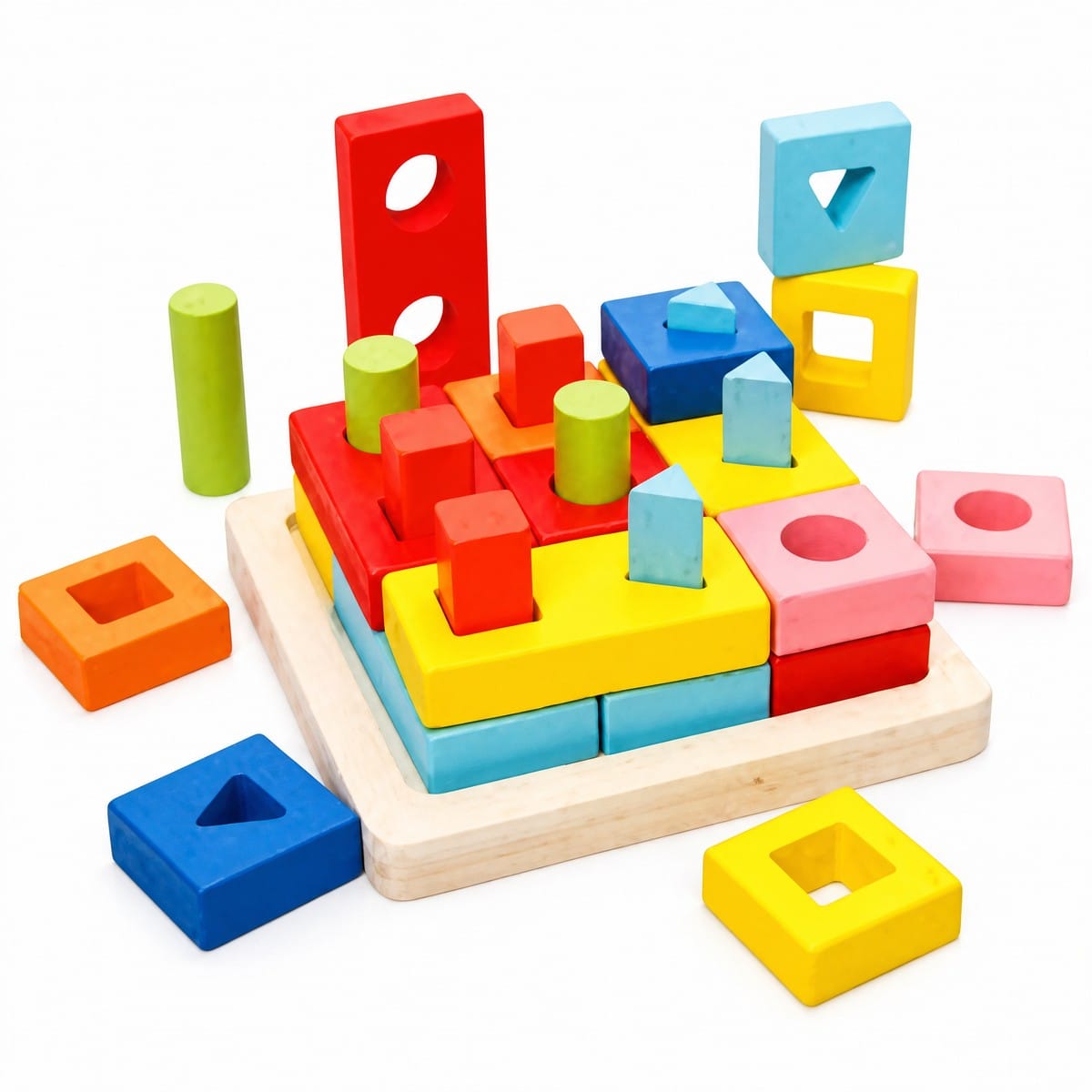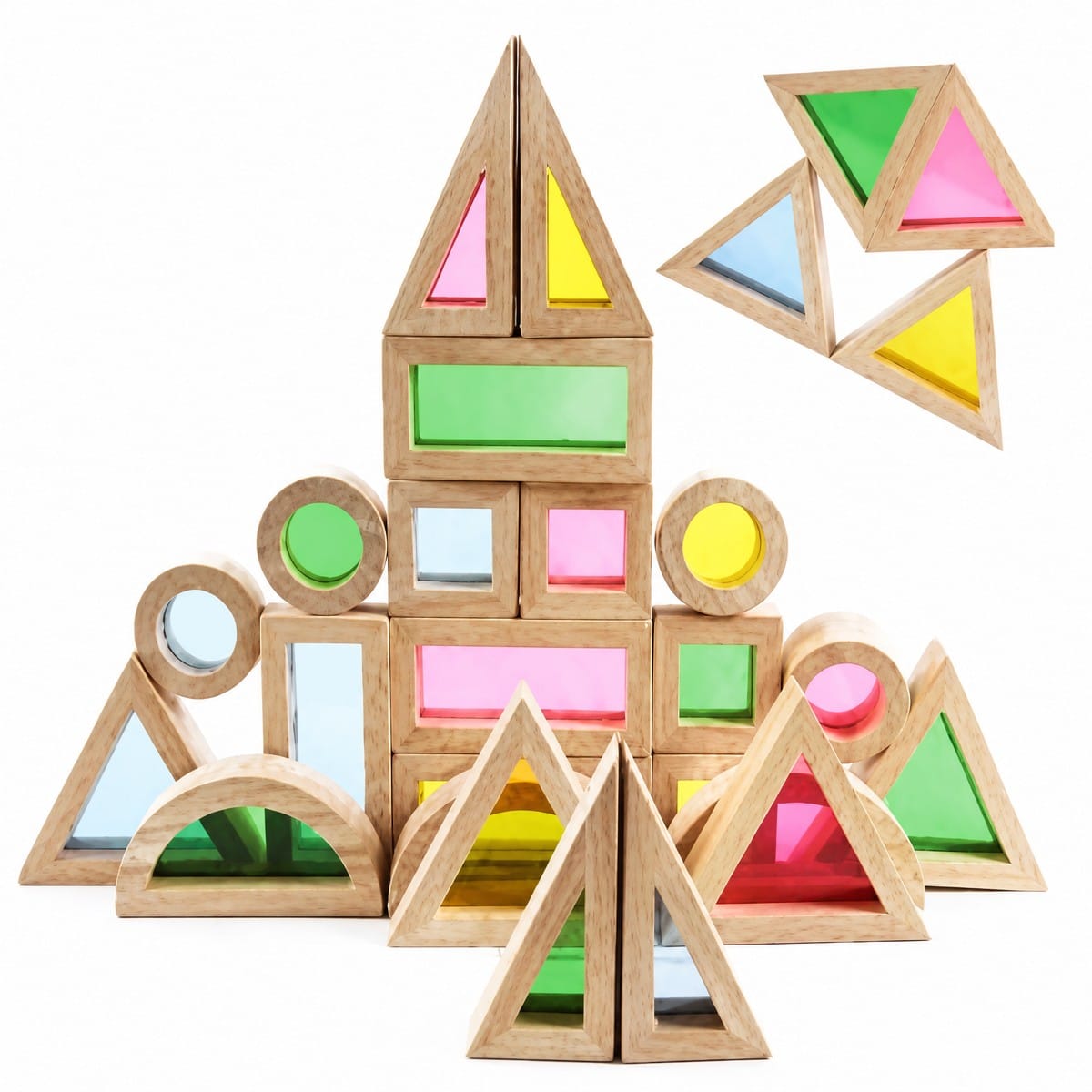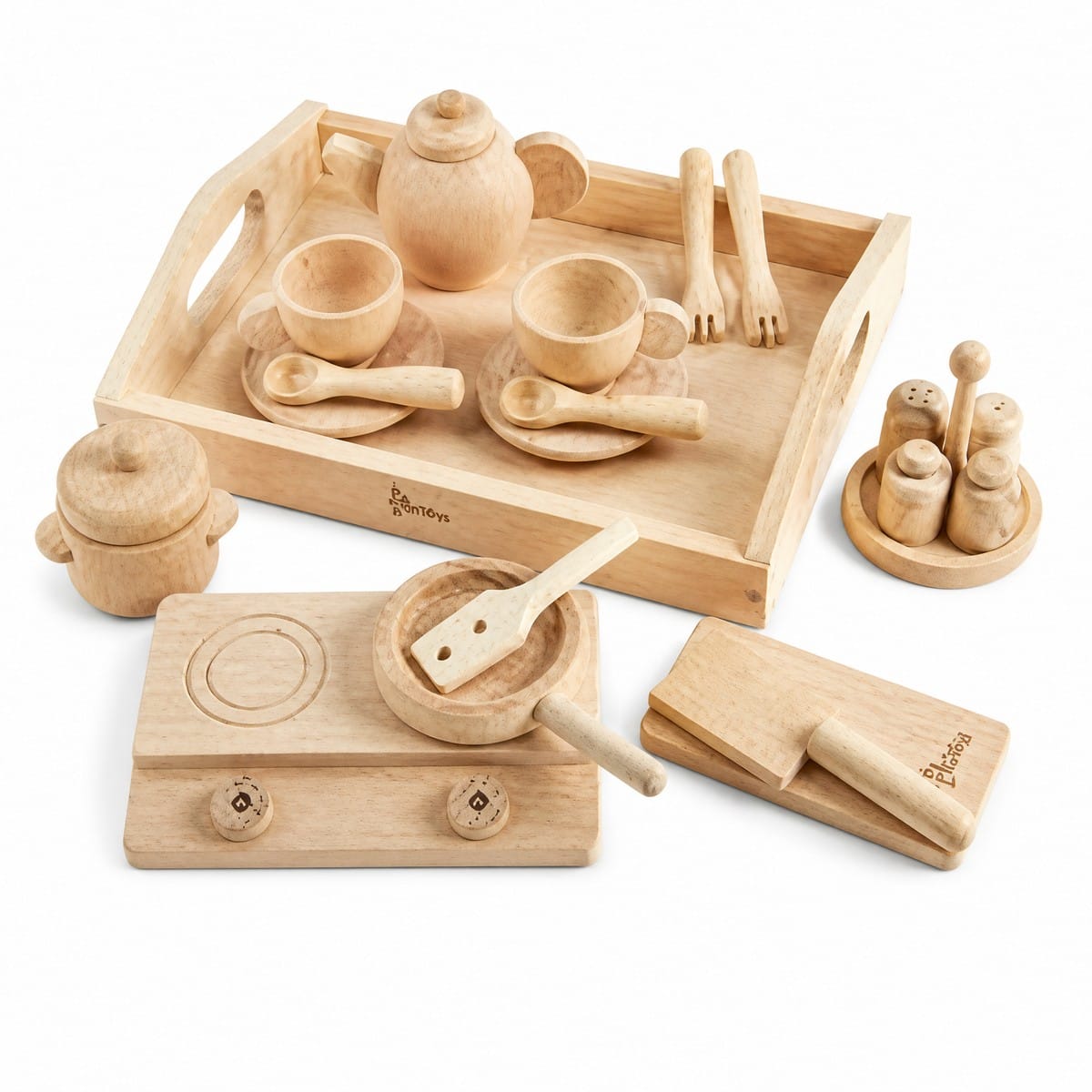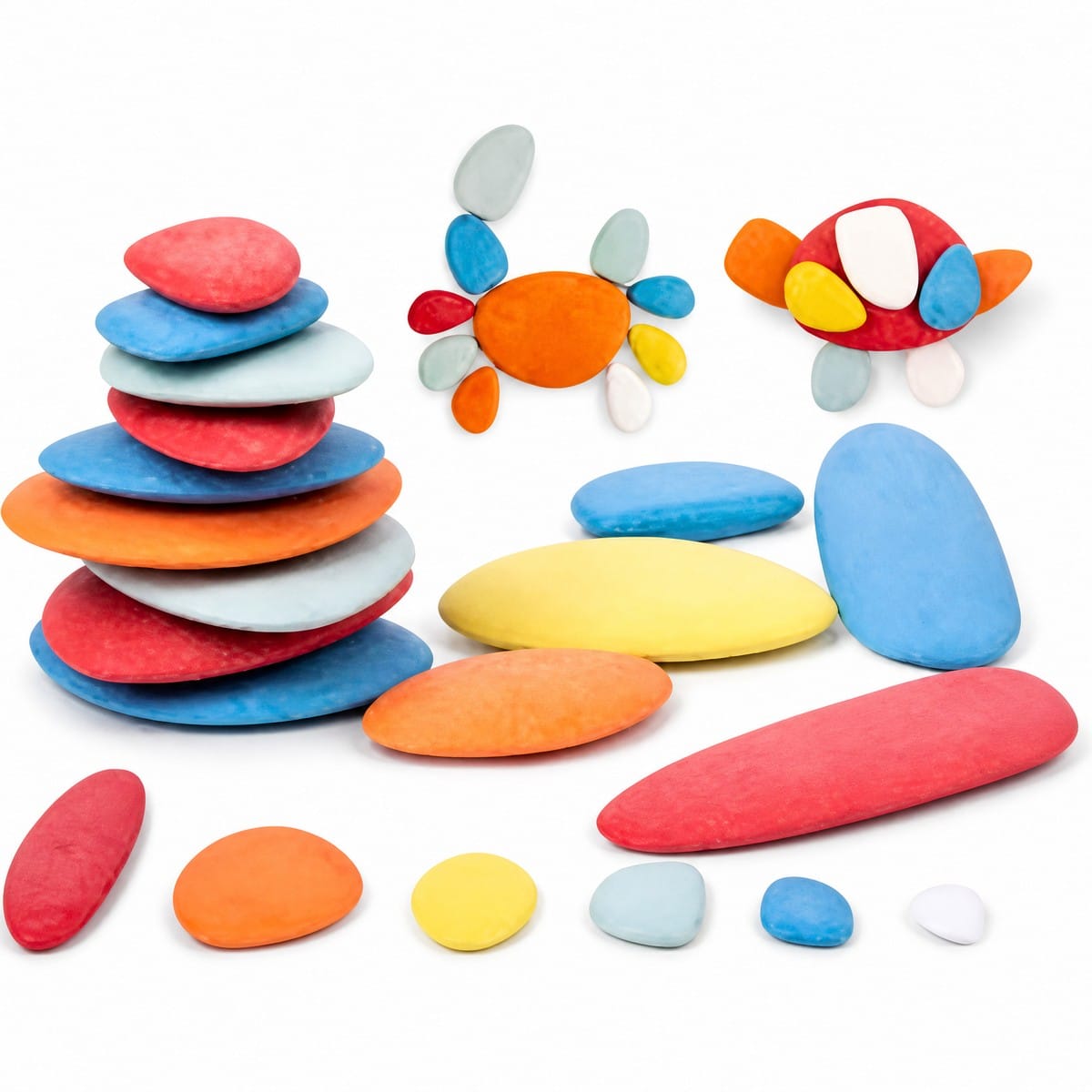
What does wood offer?
- Weight: the object stays put, the tower does not fall at the first breath, and the child feels what they carry.
- A surface and temperature that are pleasant to touch.
- Simple shapes that leave the play to the child.
- Wear that is visible and easy to check: a chip or crack is spotted at a glance.
What are its limits?
- Care: wood cannot be soaked or machine washed.
- Water and outdoors: it suits neither water play nor the sandpit.
- Weight again: a thrown wooden block hurts more than a foam one.
- Purchase price, often higher per item.
Where is plastic still the better choice?
For water, sand and outdoor toys, for crockery that goes in the dishwasher, and for baby group objects that your hygiene plan requires to be washed in water several times a day.
How should you divide materials in the room?
- Wood: insets, puzzles, sorting, threading, stacking, kitchen and workbench, blocks and planks, movement structures.
- Plastic or silicone: water and sand play, outdoor toys, machine-washable objects.
- Fabric and foam: soft corner, large modules to throw and stack.
What about cost over time?
Compare the price with the length of use, not with the purchase price. A toy that stands up to several years of group use and whose condition is easy to check costs less per year than one replaced every year. Ask the supplier whether the item is intended for group settings.