What should you settle before buying?
In Switzerland, running a daycare requires authorisation. Supervision lies with the canton or the commune, each with its own requirements for premises, staffing and the educational concept. Start with your supervisory authority’s guidelines: they set the number of groups and their age range, and so your materials list.
Then separate two budgets: furniture and fittings on one side, play materials on the other. This page covers only the second.
Which materials for the baby group?
Few objects, simple and easy to grasp, and plenty of floor space.
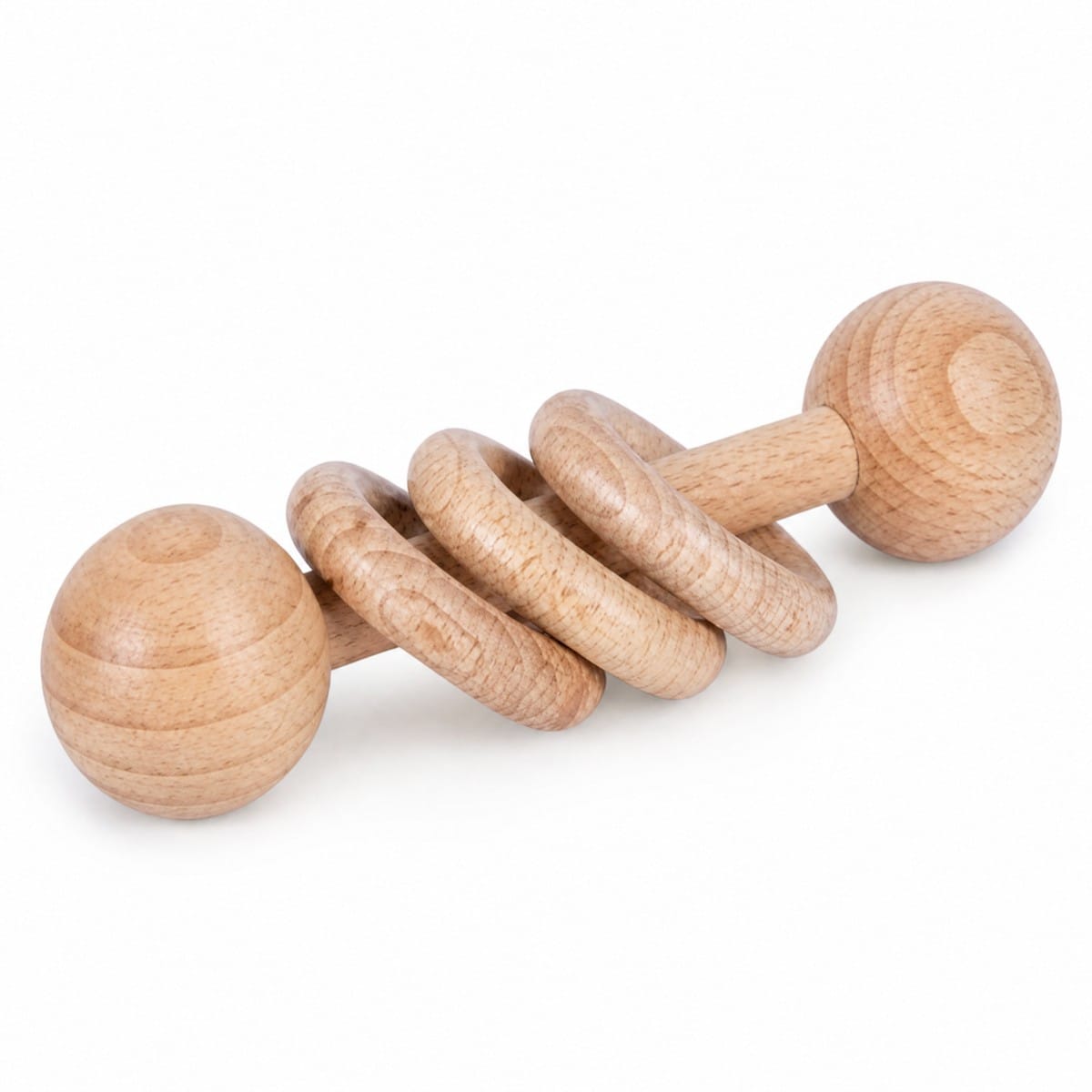
- Rattles, rings and grasping toys, several of each
- Rolling objects that invite crawling
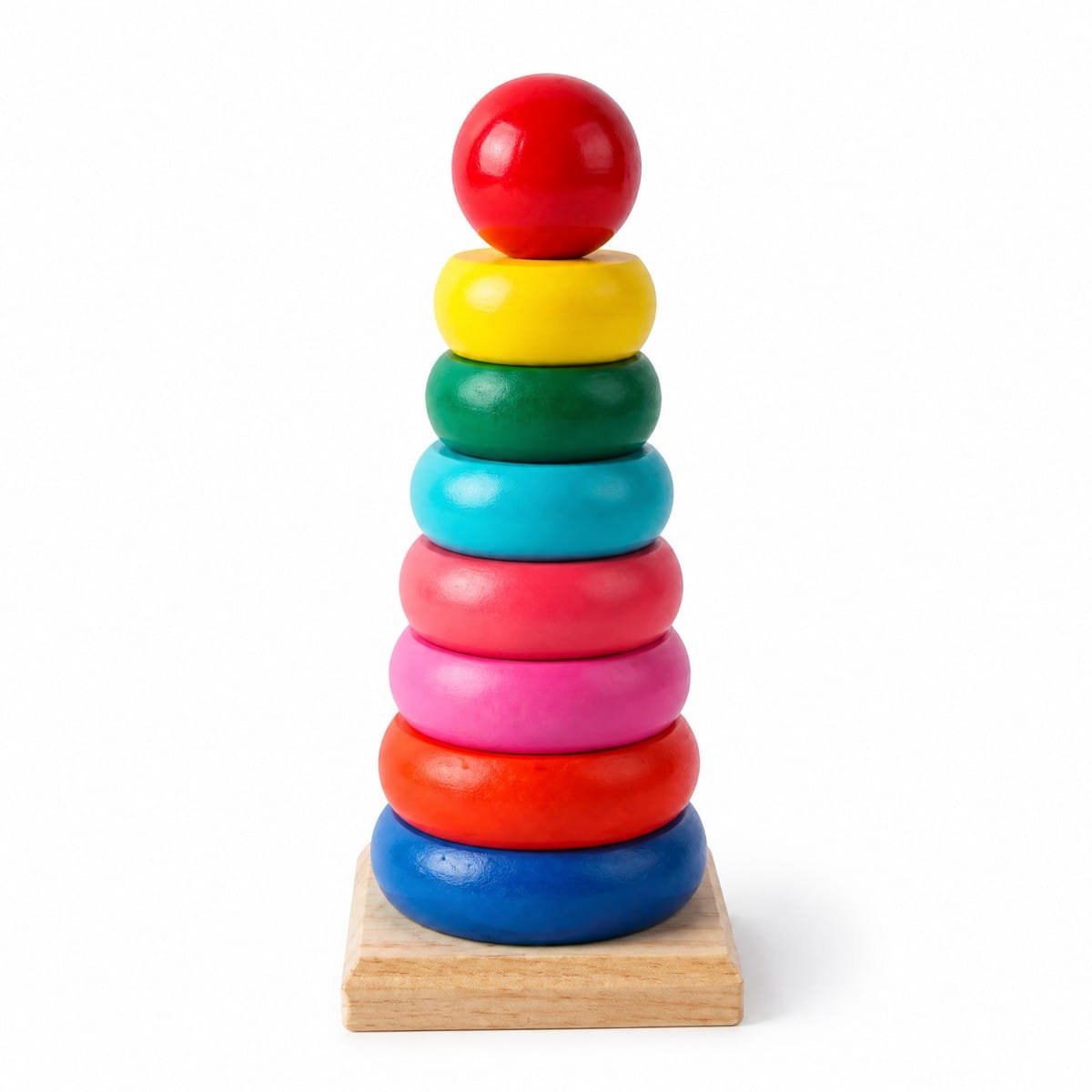
- A ring stacker and a first fitting game
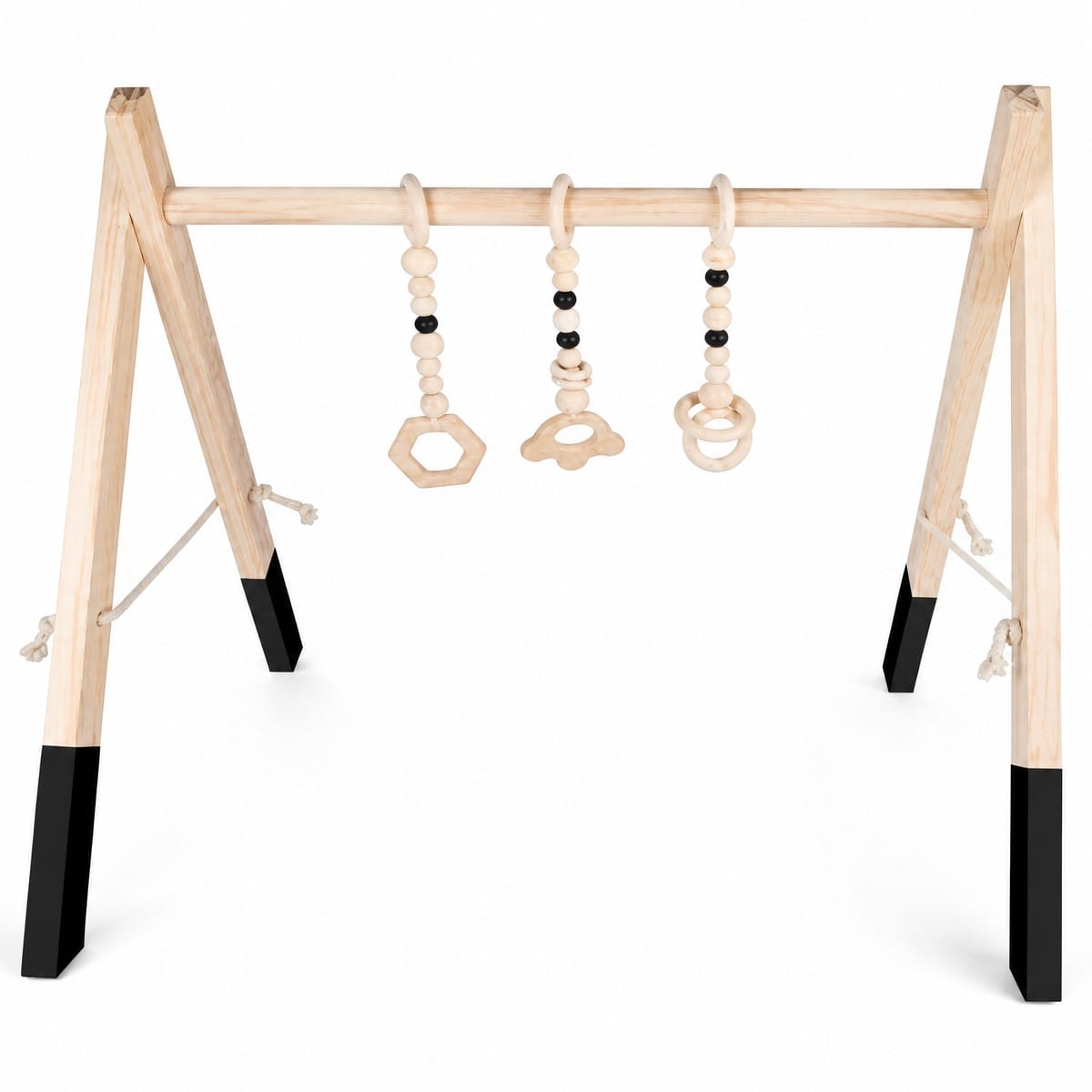
- An activity gym for the youngest
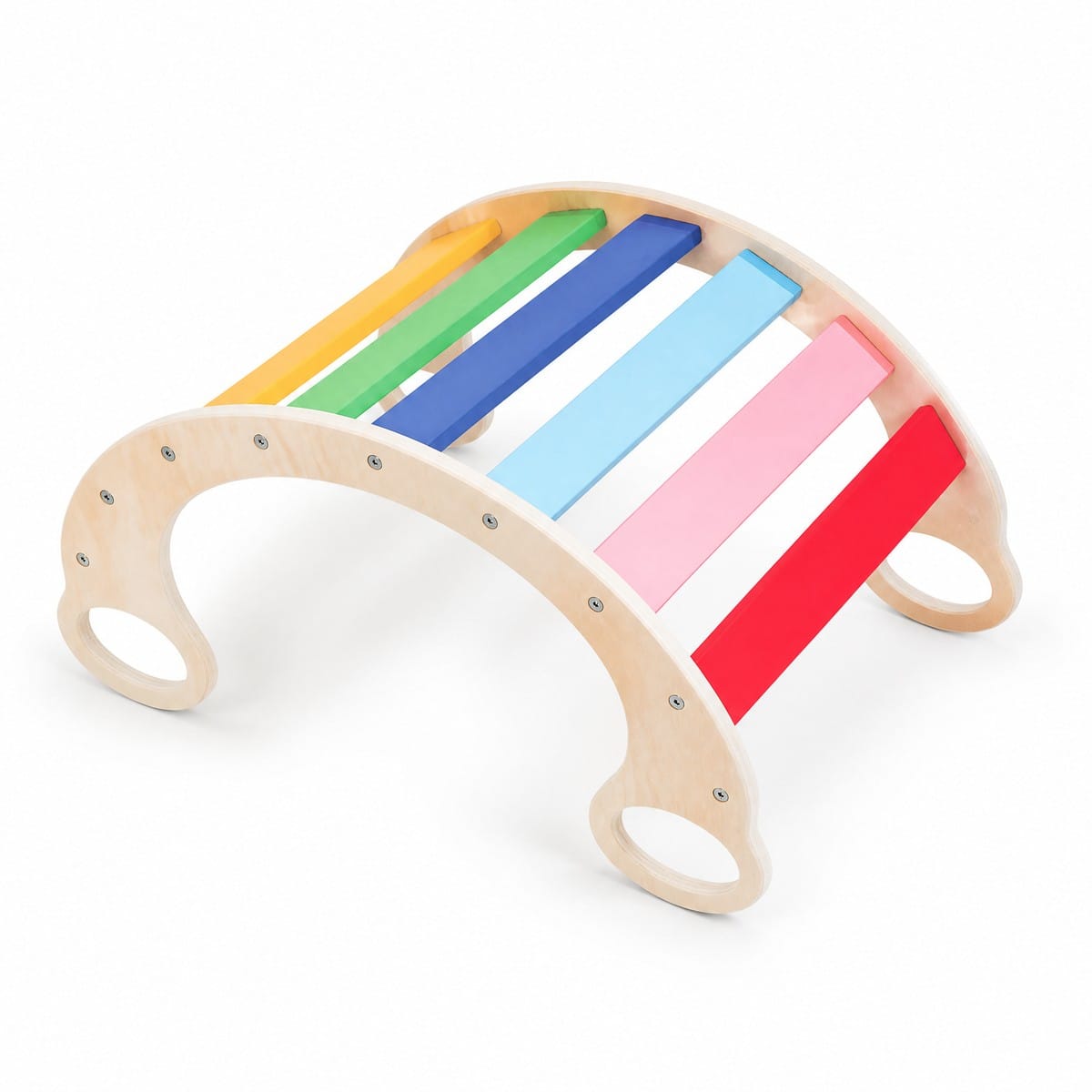
- One low movement element: an arch or a balance board
Which materials for toddlers?
The child walks, carries, fills and empties. The materials follow these actions.
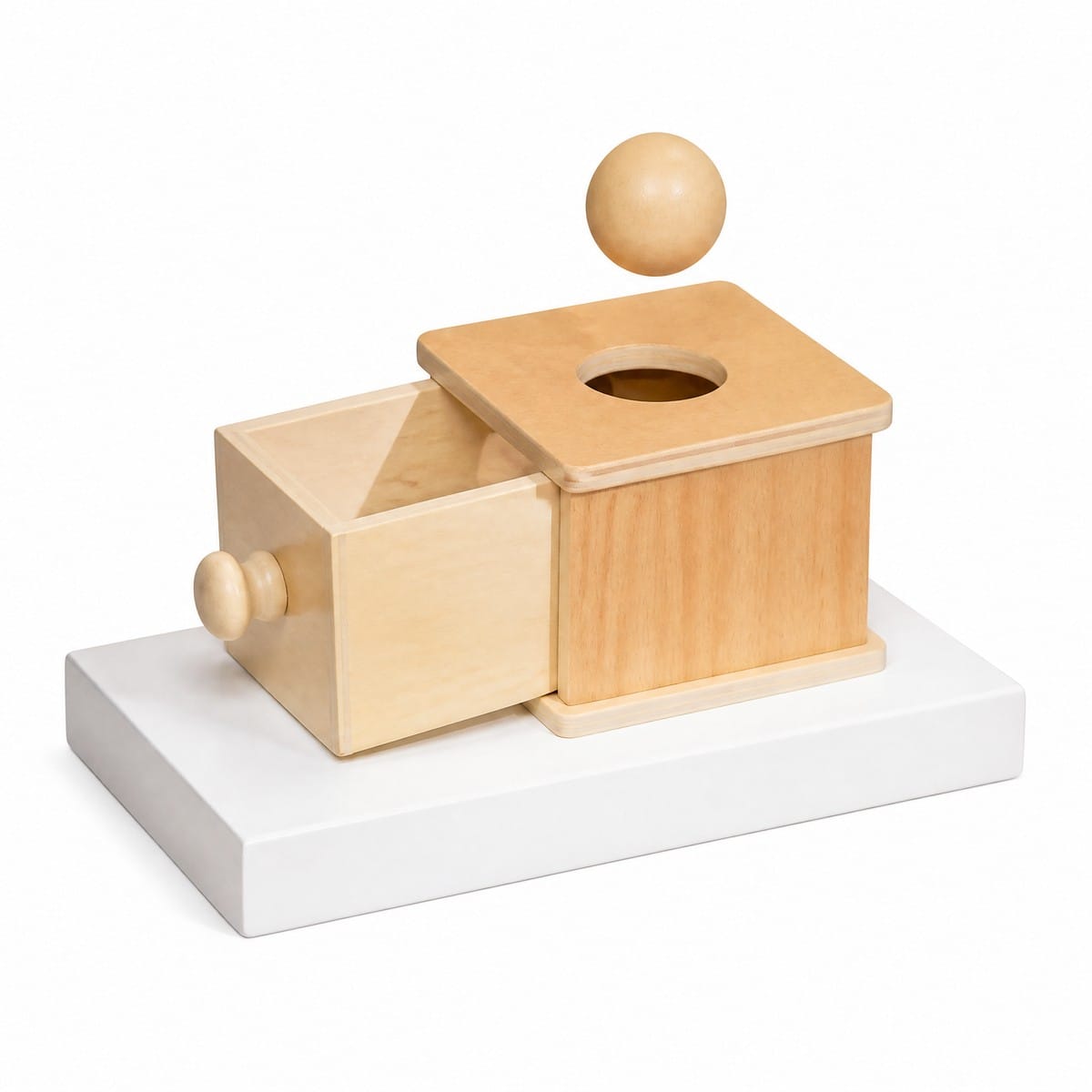
- Shape boxes and object permanence boxes
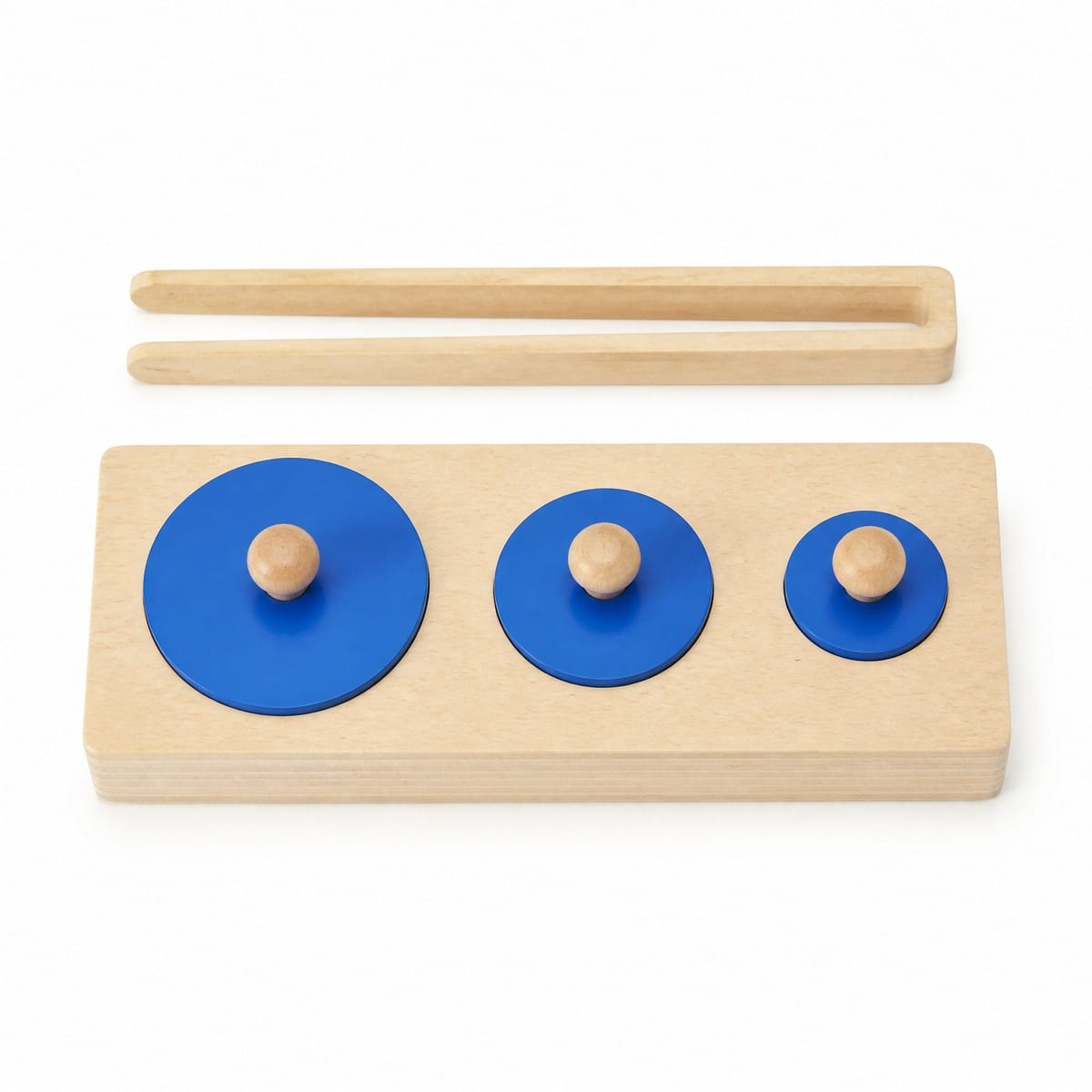
- First knobbed insets and puzzles with large pieces
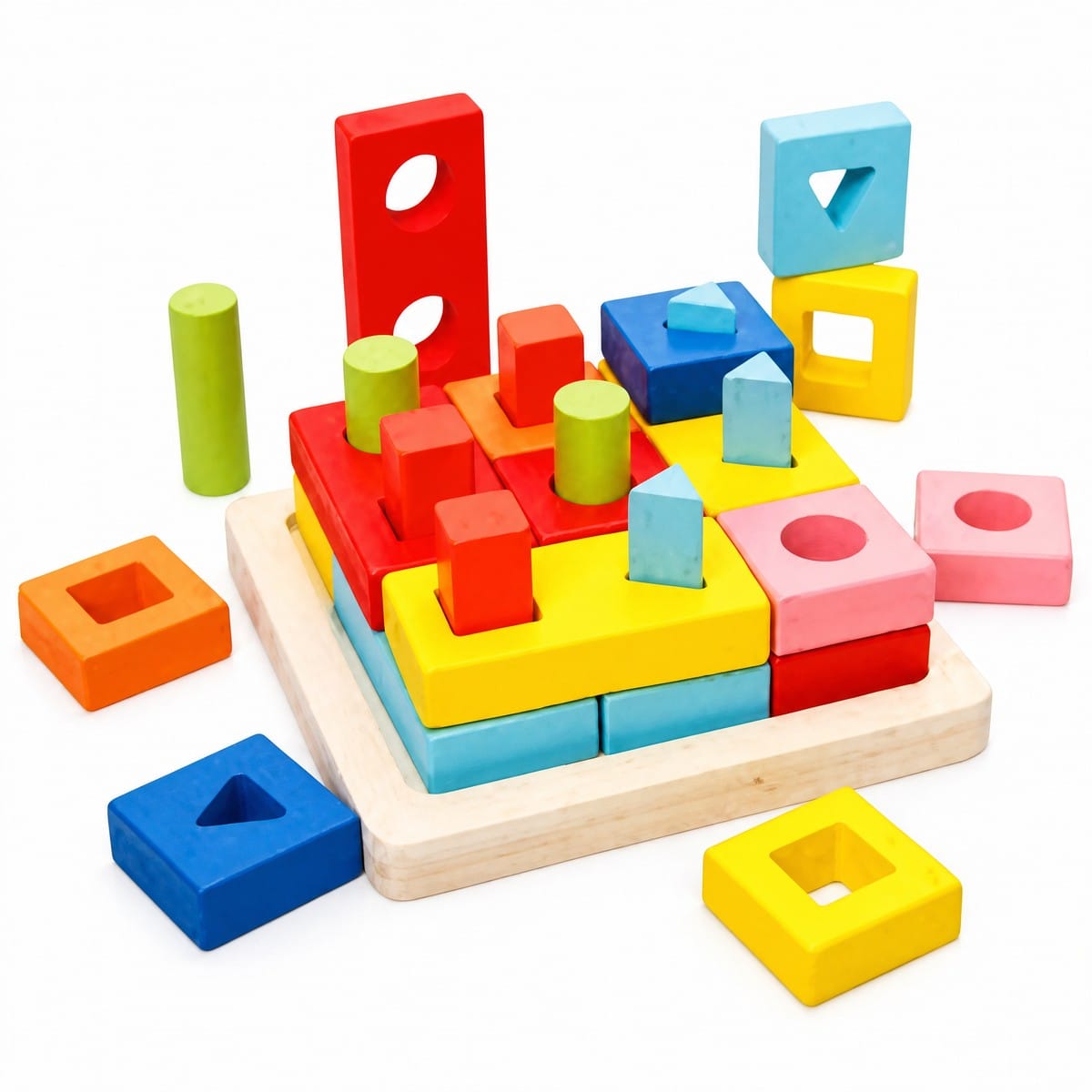
- Stacking games and sorting by colour
- A ride-on and a pull-along toy
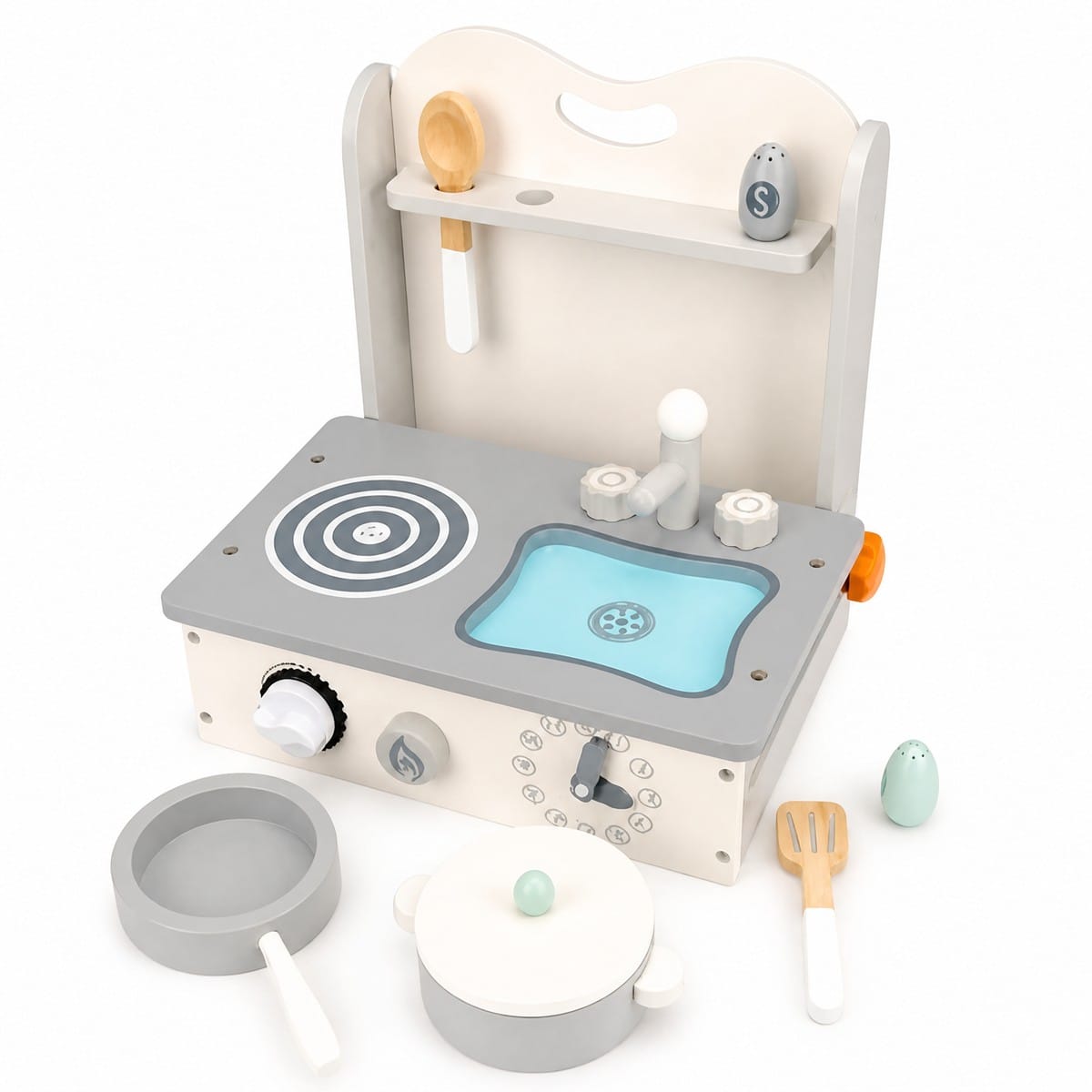
- A simple play kitchen: crockery and a few foods
Which materials for older children?
Play happens in groups and lasts longer.
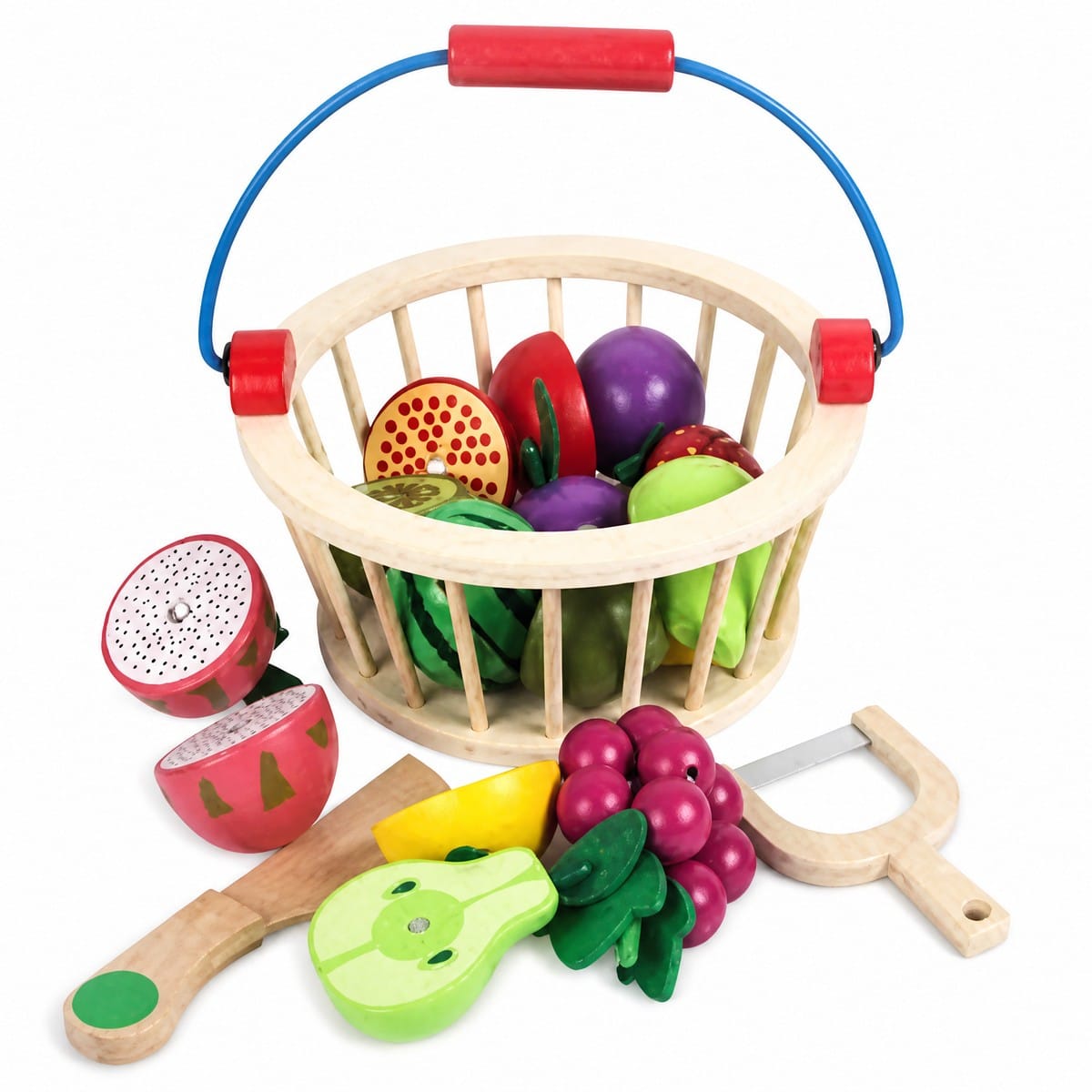
- A pretend play corner: kitchen, food to cut, doctor’s kit, workbench
- Frame puzzles, layered puzzles and mosaics
- Sorting with tongs, threading and screwing for fine motor skills
- A construction set with many pieces
- First number materials and games with a simple rule
How many toys do you need?
Fewer than you think. Three copies of the same rattle are better than one copy each of three models: with the youngest, most conflicts start over an object there is only one of.
Keep part of the materials in reserve and rotate them every few weeks. Children rediscover what comes back, and the room stays easy to read.
What can be bought later?
Large themed pieces (train set, car park, large kitchen), maths materials and board games can wait until the groups are formed and the team has observed the children.